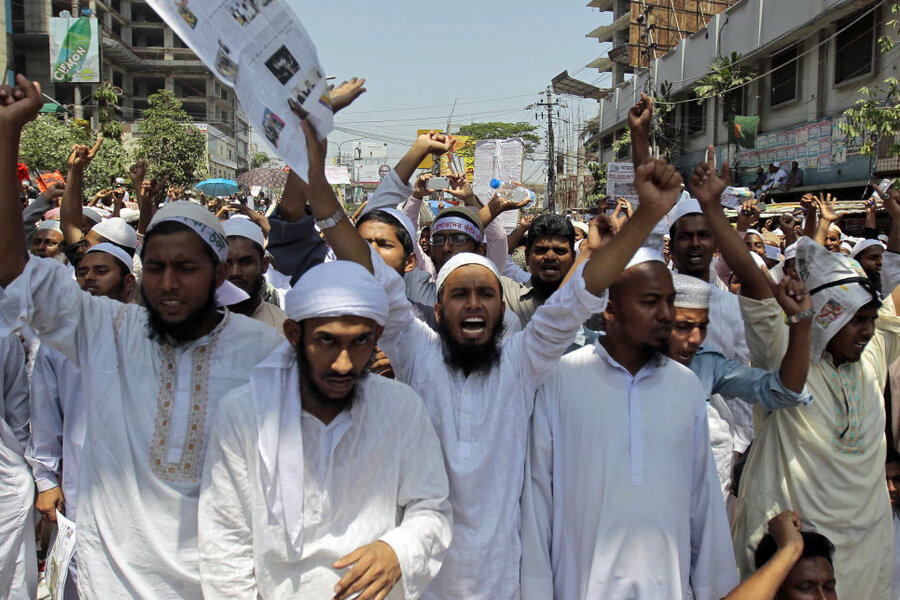
As mob violence surges across the country, law enforcement repeatedly fails to prevent deaths—even when officers are present at the scene
In the span of eight months, three people have died in mob attacks in Bangladesh while police were either nearby or present on the scene. In each case, law enforcement failed to prevent the deaths. The pattern suggests a systemic crisis in the state’s ability—or willingness—to protect citizens from religiously-motivated violence.
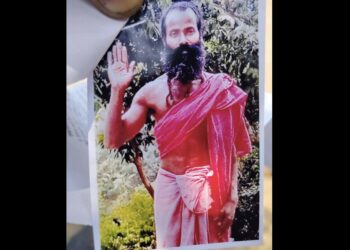
The latest death occurred just days ago in Kushtia district. A self-proclaimed spiritual leader named Shamim Reza Jahangir, in his 60s, was beaten and hacked to death by a mob of over 200 people who accused him of insulting Islam. What made this case different was that police had advance warning. Yet when the mob attacked his shrine on Saturday afternoon, the violence overwhelmed the security response. Jahangir died from his injuries.
“Sensing that something might happen, police went to the spot, and the administration tried their best,” said Touhid bin Hasan, the chief administrative official. “But an angry mob of more than 200 people attacked his residence.”
Police Retreat as Men Are Beaten to Death
Six months earlier, in August 2025, two men died in Taraganj upazila of Rangpur after police withdrew from the scene of a mob beating.
Ruplal Das, 40, was a shoe repairman. Pradip Lal, 35, was a cycle-van puller. On the night of August 10, plastic bottles fell from Pradip’s cycle-van. A man who sniffed the bottles collapsed. Word spread that the men were thieves. Within minutes, a mob of hundreds had gathered and begun beating the two men at a school ground.
Two police vans arrived around 9:30 p.m. while the men were still alive and actively being beaten. Officers blew whistles to disperse the crowd but did not intervene. When the mob showed no signs of backing down, police left.
“The police even blew whistles to disperse the crowd, but when people didn’t move, the police left,” said Rafiqul Islam, a van puller who witnessed the attack.
About an hour later, after the men had been beaten unconscious, three vehicles carrying police and army personnel arrived. Ruplal Das died before reaching the hospital. Pradip Lal died shortly after arrival.
The Officer-in-Charge of Taraganj police station defended the withdrawal, saying there were “3,000-4,000 people” at the scene and “it was not possible for the police to save them.” Yet the men were still alive during the initial police response.
Attack Inside Police Station
Perhaps the most alarming incident occurred in September 2024 in Khulna. A 15-18 year old Hindu student named Utsav Mandal was taken by fellow students to a police office after being accused of making derogatory comments about Prophet Muhammad on social media.
As word spread, thousands of people gathered outside the office demanding that the boy be handed over to them. Police and armed forces established a presence. Military officials told the mob that “maximum punishment” would be given to the boy and that justice would be served through legal means.
Despite these assurances, the mob did not disperse. Around 11:45 p.m., the crowd overpowered security and breached the compound. They attacked Utsav Mandal in the presence of police, army, and navy personnel. Videos of the attack, which spread on social media, show the boy pleading for his life as uniformed officers stood nearby.
The boy survived, rescued alive by army personnel. But he was critically injured. In a final indignity, after recovery, he was charged under the Cyber Security Act for the alleged social media post that triggered the mob violence. He became a victim of both mob violence and state prosecution.
A Larger Crisis
The deaths of Ruplal Das, Pradip Lal, Utsav Mandal, and Shamim Reza Jahangir are not isolated incidents. According to Odhikar, a Dhaka-based human rights organization, at least 153 people have been killed by mob violence between August 2024—when the political upheaval that ousted Sheikh Hasina occurred—and September 2025.
A significant portion of these deaths are connected to accusations of blasphemy, religious insult, or alleged defamation of religious figures. What distinguishes these deaths from ordinary mob violence is the state’s near-total abdication of its protective function.
In each of the recent cases, police failure was rationalized rather than investigated. Officials offered explanations: the mob was too large, the police did their best, the situation was impossible to control. Yet in each case, the victims were still alive when police were present and could have intervened with greater force, called for reinforcements, or established protective perimeters.
“The state’s duty to protect life is foundational,” said one rights advocate familiar with these cases, speaking on condition of anonymity. “When police retreat from mob violence, or when they allow crowds to breach police custody, the message is that mob justice is acceptable and that the state cannot or will not protect you.”
Questions About Police Commitment
The failures raise uncomfortable questions about police priorities in religiously-charged cases. In each incident, police appear to have prioritized appeasement over intervention.
In the Utsav Mandal case, a police officer told the mob that “maximum punishment” would be given to the accused—a statement that legitimized the mob’s anger rather than calling for law and order. The subsequent prosecution of Utsav Mandal under the Cyber Security Act suggests that police viewed the alleged blasphemy as a crime worth prosecuting, while viewing the mob violence as an inevitable consequence.
“In religiously-charged cases, police behavior is different,” said another observer. “There’s a sense that the mob’s anger is justified, and that the state’s role is to punish the alleged offense—not to protect the accused from the mob.”
Institutional Weakness and Impunity
The broader context is one of institutional weakness. Following the political upheaval of August 2024, law enforcement agencies have been weakened and uncertain of their role. This uncertainty has created a vacuum in which mob violence flourishes.
Moreover, mobs appear to operate with a growing sense of impunity. If police do not intervene to prevent mob killing in plain view, if mobs successfully overpower security forces and achieve their objectives, then future mobs will be emboldened.
The Kushtia case is particularly telling. Despite advance warning that violence was likely, despite pre-positioned police and paramilitary forces, the mob still succeeded in killing Jahangir. The message is clear: even state preparation and presence cannot guarantee safety.
“Where mobs believe they can damage lives with little consequence, the threshold for violence falls,” said Kallol Mustafa, a writer and activist, in a post-incident comment. “During the interim period, there were more statements condemning mob violence than actual action. People thought that once an elected government came in, it would perhaps take action. In reality, not only is there no action, the much-cherished elected government now does not even issue statements of condemnation.”
What Happens Next?
So far, there has been no indication that police officials will face discipline for their failures to intervene. No independent investigation has been announced into the deaths. The pattern appears likely to continue.
Unless law enforcement demonstrates a capacity and commitment to prevent mob violence—even in religiously-charged cases—the toll will continue to rise. For those accused of blasphemy or religious insult, the message is unambiguous: the state cannot protect you from the mob.
Sources :
Statements from human rights organizations including Odhikar, BHBCUC and the Human Rights Congress for Bangladesh Minorities.
https://www.thedailystar.net/news/crime-justice/news/family-kushtias-slain-pir-says-no-case-be-filed-4150541
https://bdnews24.com/bangladesh/2bc11f1b3306
https://www.tbsnews.net/bangladesh/crime/spiritual-leader-killed-mob-kushtia-over-allegations-demeaning-religion-1408766
https://bdnews24.com/bangladesh/5a346c9e2c3b
https://en.prothomalo.com/amp/story/bangladesh/local-news/bsgtxjh0ux
https://timesofindia.indiatimes.com/world/south-asia/utsav-mandal-hindu-youngster-attacked-by-mob-inside-police-station-is-alive-bangladesh-army/amp_articleshow/113123172.cms
make an article on inactivity or police failure to protect life accused Blasphemy in Bangladesh.